3D Hexagon Quilt Block Pattern

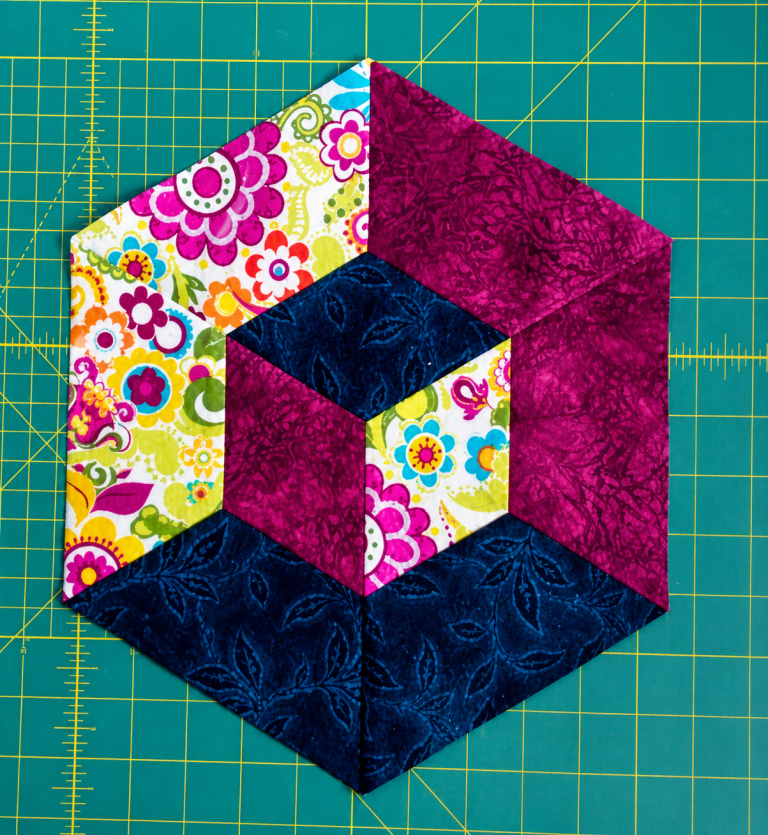
The 3D Hexagon Quilt Block Pattern is one of the most eye-catching quilt designs for quilters who love creating the illusion of depth using carefully arranged fabric colors. Although the block appears complex at first glance, it is actually built from simple geometric shapes that come together with precise cutting and sewing.
By combining light, medium, and dark fabrics, you can create a beautiful optical illusion that makes each hexagon appear to pop off the surface of the quilt.Whether you are a beginner looking for a fun challenge or an experienced quilter searching for your next favorite project, the 3D Hexagon Quilt Block Pattern offers endless creative possibilities.
The block works beautifully in wall hangings, table runners, pillows, baby quilts, bed quilts, and modern home décor. Since every block can feature different color combinations, no two finished quilts ever need to look exactly alike.One of the biggest advantages of this design is its versatility. Bright floral fabrics, elegant batiks, solid cottons, reproduction prints, or modern minimalist fabrics all produce completely different visual effects. Throughout this guide, you will learn exactly how to plan your fabrics, cut the pieces accurately, assemble the units step by step, and achieve crisp, professional-looking results while improving your quilting skills.
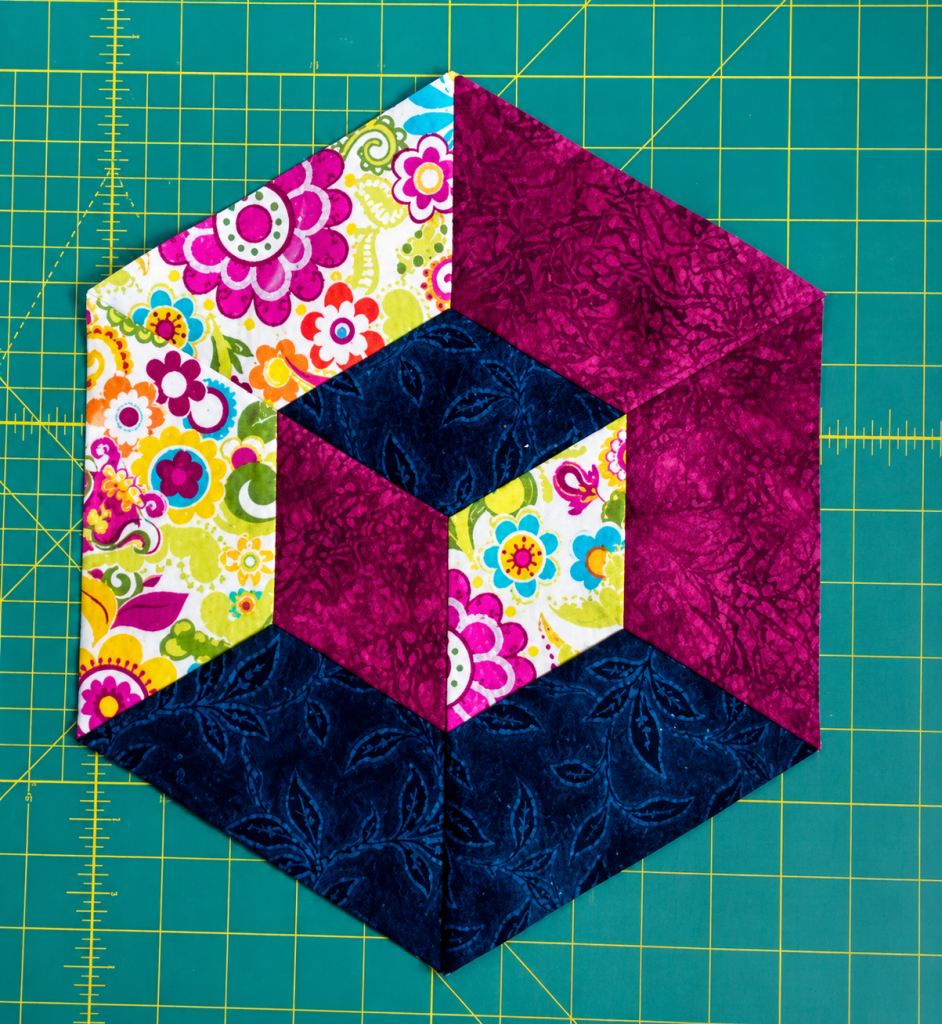
Selecting the right fabrics is one of the most important parts of making a successful 3D Hexagon Quilt Block Pattern. The three-dimensional illusion depends much more on value contrast than on the actual fabric prints. Choose one light fabric, one medium-tone fabric, and one dark fabric to create realistic shadows and highlights.
Cotton quilting fabric is highly recommended because it presses well, holds its shape during sewing, and provides accurate seams. Prewashing is optional, but many quilters prefer washing their fabrics first to eliminate shrinkage and excess dye before cutting.
Gather all the necessary tools before beginning. You will need a rotary cutter, self-healing cutting mat, quilting ruler, sewing machine, neutral thread, fabric marker, iron, pressing mat, and quilting pins or clips. Having everything prepared allows the sewing process to flow smoothly.
Accuracy matters throughout the entire project. Every piece should be measured carefully before cutting. Even small cutting errors can affect how the hexagon fits together later. Take your time and double-check your ruler alignment before every cut.
Pressing also plays a major role in creating clean intersections. Press each seam after sewing instead of waiting until the end. Proper pressing keeps the block flat and helps matching points align perfectly.
Before cutting into your favorite fabrics, consider making a practice block using fabric scraps. This allows you to understand the construction sequence while testing color placement before committing to the final version.
Begin by cutting all fabric pieces according to your chosen template or pattern measurements. Keep the light, medium, and dark fabrics organized into separate groups to avoid mixing pieces during assembly.
Lay all pieces on a design board or flat surface before sewing. This step helps visualize the finished 3D Hexagon Quilt Block Pattern and allows you to adjust color placement if necessary. Many quilters discover improved layouts simply by rearranging pieces before stitching.
Start sewing small units together using a consistent ¼-inch seam allowance. Chain piecing can save time if you are making multiple blocks. After each seam, press carefully without stretching the fabric.
Assemble the units gradually into larger sections rather than attempting to sew the entire block at once. Working in stages helps maintain accuracy and reduces distortion, especially around the angled seams that create the hexagon shape.
Pay close attention when matching seam intersections. Pinning at each intersection prevents shifting while sewing and creates crisp points that greatly improve the finished appearance of the block.
Continue joining the remaining sections until the complete hexagon block is assembled. Give the finished block one final press from the back, followed by a light press from the front. Your block should lie flat with clean edges and a striking three-dimensional appearance.
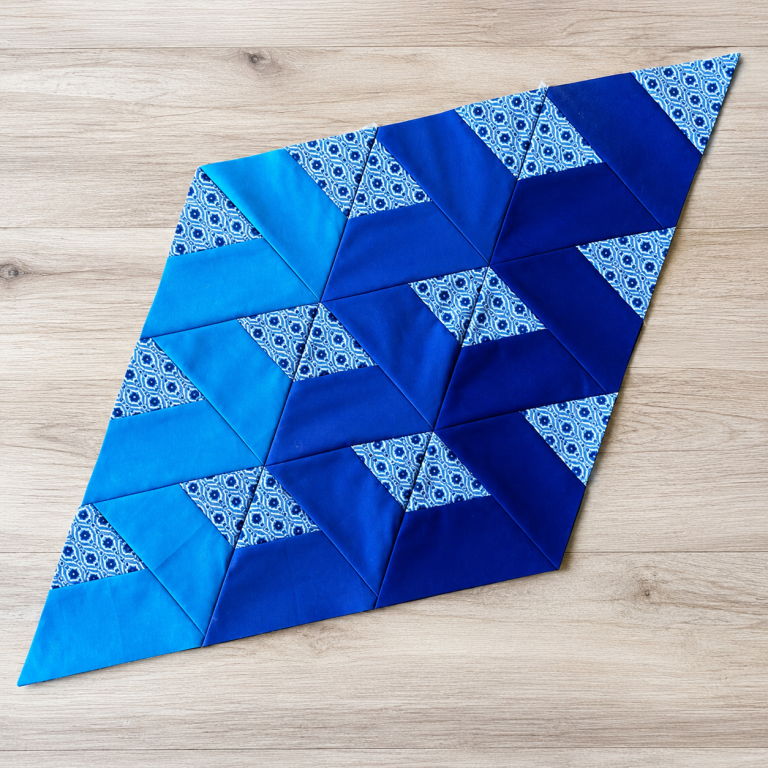
The illusion in a 3D Hexagon Quilt Block Pattern comes from strategic color placement rather than complicated piecing. Always imagine a light source shining onto the block. One side should appear illuminated, another partially shaded, and the final side should represent the darkest shadow.
Solid fabrics often create the strongest 3D effect because they eliminate visual distractions. However, subtle batiks, tone-on-tone prints, and small-scale florals can also produce beautiful results while adding personality to the quilt.
If you enjoy colorful quilts, experiment with complementary color palettes. Deep navy combined with burgundy and cream creates a classic appearance, while turquoise, gray, and white produce a modern aesthetic. Earth tones create a warm traditional look, and jewel tones offer dramatic visual depth.
Consistency across multiple blocks helps unify the finished quilt. Even if every block uses different prints, keeping the same value arrangement—light, medium, and dark—maintains the illusion throughout the entire quilt top.
Photograph your layout in black and white using your smartphone before sewing. Removing color makes it easier to evaluate value contrast. If two fabrics appear similar in grayscale, consider replacing one with a lighter or darker option.
Finally, don’t be afraid to experiment. One of the joys of quilting is discovering unexpected color combinations that produce remarkable optical effects. A simple change in fabric placement can dramatically transform the appearance of the finished block.
After completing your individual 3D Hexagon Quilt Block Pattern blocks, arrange them on a design wall or large floor space. Rotate the blocks in different directions to explore various secondary patterns created by the repeating hexagons.
Sew the rows together carefully, matching seams as accurately as possible. Press row seams in alternating directions whenever practical to reduce bulk and improve seam nesting.
Once the quilt top is complete, layer it with batting and backing fabric. Smooth all layers carefully before basting with safety pins, temporary spray adhesive, or hand basting stitches to prevent shifting during quilting.
Choose quilting designs that enhance rather than overpower the geometric illusion. Straight-line quilting, echo quilting, stitch-in-the-ditch, or gentle geometric motifs often complement the bold structure of the hexagon blocks beautifully.
Trim the quilt evenly after quilting and attach a binding using your preferred finishing technique. A neatly applied binding frames the design and gives the quilt a polished, professional appearance.
After the final stitches are complete, wash the quilt if desired to create the soft texture and gentle crinkled appearance that many quilters love. Your finished project will showcase both precise craftsmanship and the fascinating dimensional illusion that makes this pattern so popular.
Is the 3D Hexagon Quilt Block Pattern suitable for beginners?
Yes. Beginners with basic rotary cutting and sewing experience can successfully complete this project by working slowly and maintaining an accurate quarter-inch seam allowance.
What fabrics work best for this pattern?
High-quality quilting cotton is the most popular choice because it presses well, cuts accurately, and produces crisp seams.
Do I need special templates?
Many versions can be made using standard quilting rulers and downloadable templates, while others use specialty rulers for faster cutting.
How can I improve the three-dimensional illusion?
Focus on value contrast rather than fabric color. One light, one medium, and one dark fabric create the strongest visual effect.
Can I make an entire quilt using this block?
Absolutely. Repeating the block creates stunning bed quilts, throws, wall hangings, table runners, and decorative cushions.
Should I press seams open or to one side?
Either method works. Many quilters prefer pressing to one side because it helps seams nest together during assembly.
How large should each block be?
The finished size depends on the template you choose. Common finished sizes range from approximately 8 to 12 inches across.
Can scraps be used for this project?
Yes. Scrap fabrics are excellent for creating colorful, unique versions while maintaining the required light, medium, and dark value arrangement.
Video Tutorial:
The 3D Hexagon Quilt Block Pattern is an excellent project for quilters who enjoy combining precise piecing with creative color planning. Although the finished design looks impressively complex, the construction process becomes straightforward when approached one step at a time. Careful cutting, accurate seam allowances, consistent pressing, and thoughtful fabric selection all contribute to a beautiful finished block with remarkable depth.
Throughout this guide, you learned how to choose fabrics based on value contrast, prepare your quilting tools, cut pieces accurately, assemble the block step by step, improve the three-dimensional illusion through strategic color placement, join multiple blocks into a quilt top, quilt the finished project, and apply the final binding. These techniques can also be adapted to many other geometric quilt designs, helping you build confidence for future quilting projects.
If you enjoyed this tutorial on the 3D Hexagon Quilt Block Pattern, please leave your honest opinion in the comments and share your suggestions. Your feedback helps improve future tutorials and inspires other quilters to begin their own creative quilting journey.